

There are ingredients that belong so deeply to a territory that they become part of its identity. In Rome, one of these is undoubtedly the artichoke. The star of popular recipes and preparations now known well beyond the borders of the Capital, the artichoke tells the story of a cuisine made of seasonality, simple ingredients, and bold flavors. Among its most famous interpretations is the Roman-style artichoke (carciofo alla romana), one of the signature recipes of Lazio’s gastronomic tradition. Let’s look at its origins.
Roman cuisine: simplicity and character
Roman cuisine stems from a popular tradition that has managed to transform modest ingredients into dishes with an unmistakable character.
Pasta, vegetables, legumes, cheese, meat, and offal are the foundation of a gastronomy built on seasonality and the ability not to waste what was available. It is a straightforward cuisine, without too many frills, where the quality of the raw materials and the right balance between a few ingredients make the difference. Carbonara, amatriciana, gricia, and cacio e pepe are known worldwide today, as are dishes linked to the more home-style and popular culinary tradition, from coda alla vaccinara (oxtail stew) to abbacchio (roast lamb).
And among the stars of the Roman vegetable garden is the artichoke itself.
Roman-style artichoke: the traditional recipe
The star of the traditional recipe is the Romanesco artichoke from Lazio PGI, also known as “mammola” or “cimarolo,” characterized by its round shape and absence of thorns. Its seasonality is mainly linked to the spring months, a time when Roman markets and tables are filled with artichokes.
But how do you prepare a Roman-style artichoke?
After being carefully cleaned, the artichoke is seasoned with a few ingredients that enhance its flavor: garlic, mentuccia (lesser calamint), parsley, extra virgin olive oil, and pepper are among the typical elements of the preparation.
Cooking takes place slowly, with the artichoke placed stem-up and left to soften until it reaches a tender consistency. It is a recipe that, in its simplicity, perfectly expresses one of the most recognizable characteristics of Roman gastronomy: a few ingredients, chosen and treated in the right way.
Roman-style artichoke and Jewish-style artichoke: two traditions compared
When talking about artichokes in Rome, it is impossible not to mention the carciofo alla giudia (Jewish-style artichoke). Two different techniques, two completely different results, but a single ingredient taking center stage.
While the Roman-style artichoke is cooked slowly and remains soft and juicy, the Jewish-style one is deep-fried whole, until it takes on its characteristic open shape and a crunchy texture.
This variety tells the story of how deeply rooted the artichoke is in the capital’s cuisine and how it has managed to cross different traditions and neighborhoods of the city.
The Roman-style artichoke according to Il Piccolo Mondo
Talking about Roman cuisine at Il Piccolo Mondo also means talking about the history of the city. The restaurant has been open since 1954, during a period destined to become one of the most famous in Roman history. These are the years of the Dolce Vita, when Via Veneto became the center of the capital’s social life and Rome transformed into one of the most fascinating and frequented cities on the international scene.
Il Piccolo Mondo was born right in those years and has gone through decades of transformations, remaining tied to that elegant, lively, and international Rome that made the city’s history. Today, just steps away from Via Veneto, the restaurant continues to bring to the table a cuisine that looks to Roman tradition without sacrificing a contemporary sensibility.
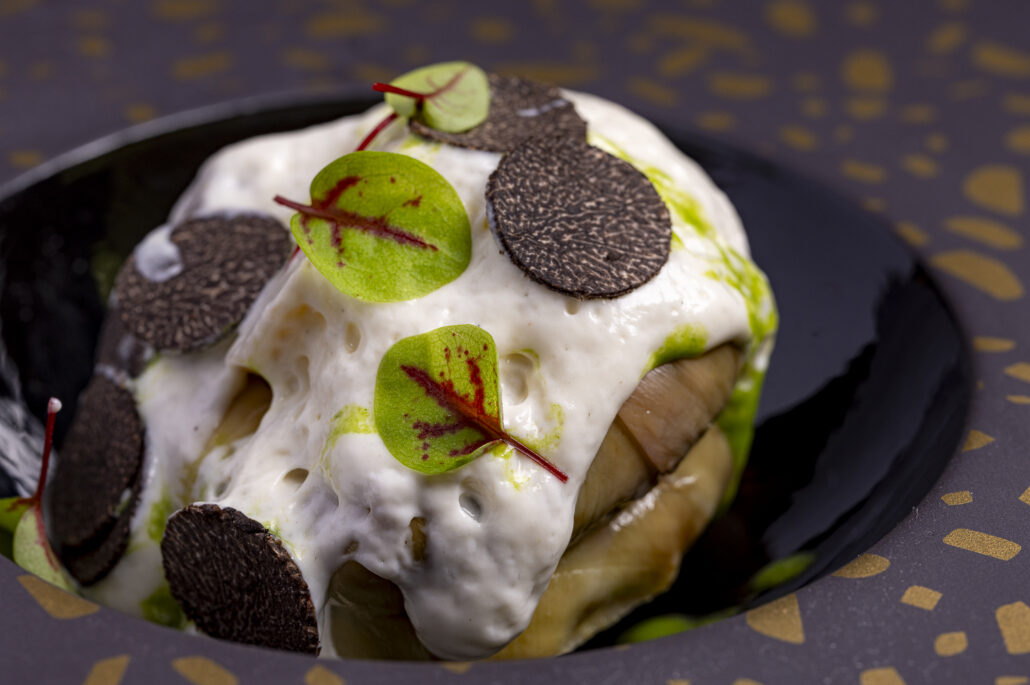
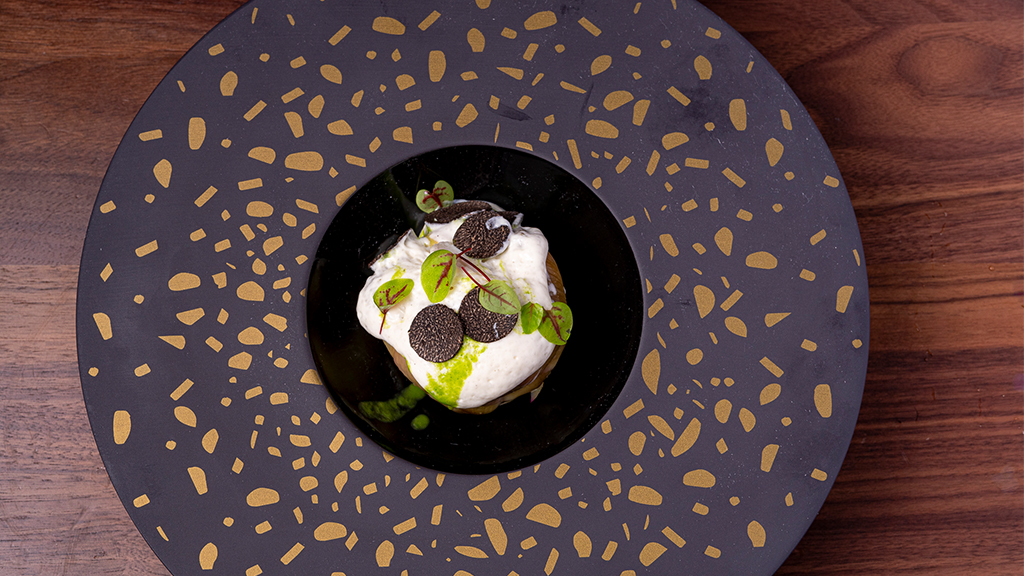
And it is precisely from a recipe so deeply linked to tradition that Chef Fabio Mancuso starts to offer his interpretation: Roman-style artichoke with pecorino foam and black truffle. The artichoke remains the star, while the pecorino adds a savory and intense note, recalling one of the most representative ingredients of Lazio’s cuisine. The foam lightens its texture and introduces a more delicate component, while the black truffle completes the dish with its bold aroma.
A reinterpretation that does not aim to erase tradition, but to start from it to tell it in a new form. This is the dialogue between past and present that characterizes the cuisine of Il Piccolo Mondo: recipes and ingredients that belong to the gastronomic memory of Rome, interpreted through a contemporary vision.
Discover the Roman cuisine of Il Piccolo Mondo
Since 1954, Il Piccolo Mondo has been part of Rome’s gastronomic history, in the heart of the Via Veneto area and just a short walk from Villa Borghese, Piazza Barberini, and the Spanish Steps. If you want to discover our other traditional dishes and more, check out our menu.
For information or to book your table, contact us. We look forward to welcoming you in the heart of Via Veneto, where the history of Rome continues, even at the table.